
Houston Water Damage Restoration
Sewage Cleanup in Houston, TX
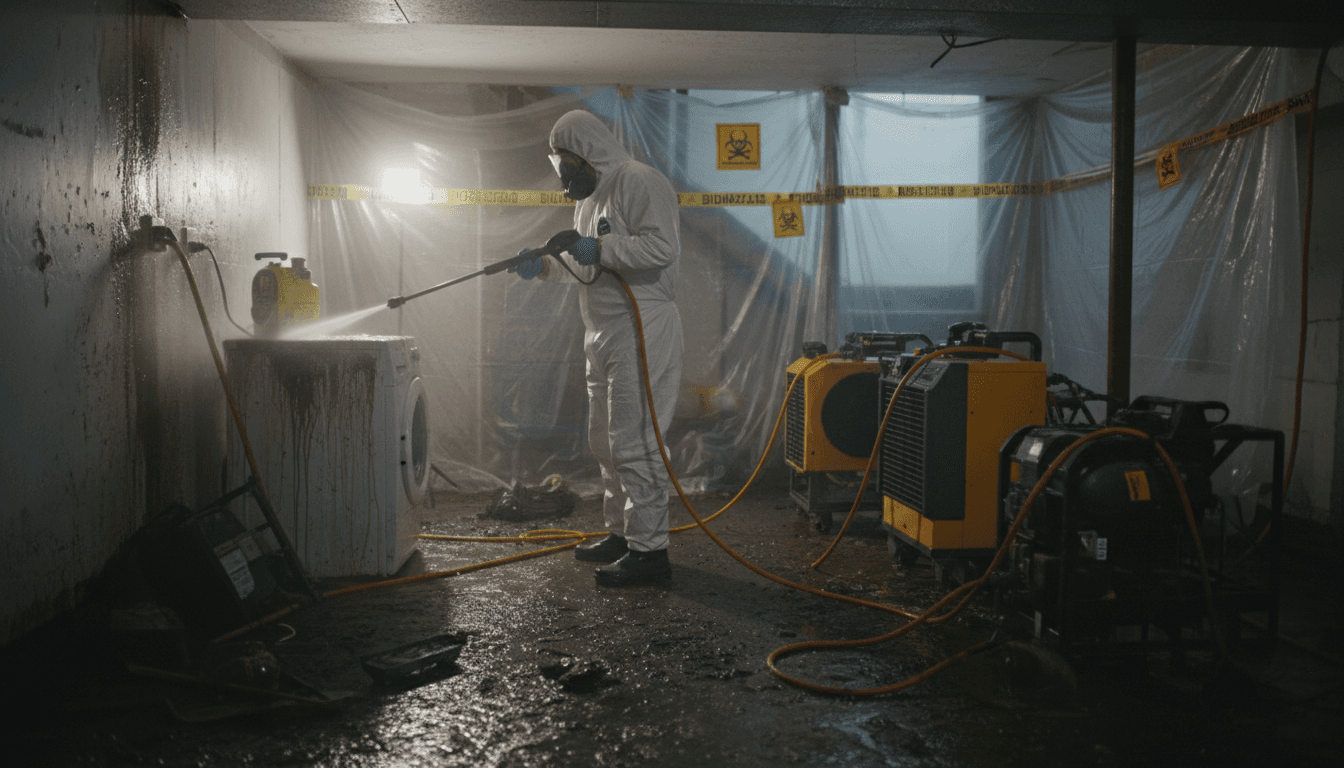
Sewage backups are a Category 3 biohazard that demand specialized handling. Our hazmat-trained crews wear full PPE, remove contaminated materials, disinfect all affected surfaces, and use hydroxyl generators to neutralize airborne pathogens and odors. We document every step for insurance purposes and won't close the job until independent testing confirms the space is safe for occupancy.
A sewage backup is one of the most unpleasant and dangerous property emergencies a Houston homeowner can experience. Raw sewage contains bacteria, viruses, parasites, and chemical contaminants that pose immediate health risks to anyone in the building. The smell alone can make a home uninhabitable. In Houston, sewage backups happen more frequently than most people realize — aging sewer infrastructure, tree root intrusion into clay pipes, heavy rainfall overwhelming the combined stormwater and sanitary sewer system, and failed lift stations in low-lying neighborhoods all contribute to the problem. Houston Water Damage Restoration provides emergency sewage cleanup with biohazard-certified crews who are trained, equipped, and experienced in handling Category 3 contamination safely and thoroughly.
Common Causes of Sewage Backups in Houston
Houston's sewer infrastructure faces a unique set of challenges. Much of the city's sanitary sewer system was built decades ago using clay or cast-iron pipes that have deteriorated over time. The region's expansive clay soils shift with seasonal moisture changes, cracking pipe joints and creating entry points for tree roots that grow toward the moisture and nutrients inside the sewer line. Live oaks, which are ubiquitous across Houston neighborhoods from River Oaks to Bellaire to Friendswood, are particularly aggressive root intruders. During heavy rainfall, stormwater can infiltrate the sanitary sewer system through cracked pipes and manholes, overwhelming capacity and causing backups into homes — especially those at lower elevations or at the bottom of drainage gradients. The Meyerland, Braeswood, and Westbury areas along Brays Bayou are especially vulnerable, as are parts of the Fifth Ward, Near Northside, and older sections of Pasadena. Homes with sewer lines that run under the foundation (slab-on-grade construction, which is standard in Houston) face the added risk that a break beneath the slab can introduce sewage directly into the soil under the home, creating a contamination problem that is difficult to detect and expensive to remediate.
Health Risks and Why Immediate Cleanup Matters
Sewage is classified as Category 3 (black water) under the IICRC S500 standard — the most contaminated category. It can contain E. coli, salmonella, hepatitis A, norovirus, giardia, cryptosporidium, and a range of other pathogens. Airborne bacteria and endotoxins released from sewage can cause respiratory infections, gastrointestinal illness, and allergic reactions. Children, the elderly, and immunocompromised individuals are at the highest risk. Beyond health hazards, sewage contains corrosive chemicals and organic matter that accelerate the deterioration of building materials. Drywall, carpet, particleboard, and insulation that contact sewage are considered non-salvageable and must be removed. The longer sewage sits in a structure, the deeper the contamination penetrates and the more material must be demolished. In Houston's heat and humidity, bacterial growth accelerates rapidly, compounding both health risks and restoration costs with every passing hour.
Our Sewage Cleanup Protocol
Our hazmat-trained crews arrive in full personal protective equipment — Tyvek suits, respirators, nitrile gloves, and rubber boots — because there is no safe way to handle raw sewage without it. We begin by extracting all standing sewage and contaminated water using dedicated extraction equipment that is decontaminated between jobs. We then remove all porous materials that contacted sewage: drywall (typically cut at least 24 inches above the visible contamination line), insulation, carpet, pad, and any particleboard or OSB subfloor that has absorbed sewage. Non-porous surfaces — concrete, tile, metal, and treated wood — are scrubbed and disinfected using EPA-registered hospital-grade antimicrobials. We treat the entire affected area, not just the visibly contaminated surfaces, because sewage-borne pathogens can be carried by splashing, wicking, and airborne aerosols. After disinfection, we deploy hydroxyl generators and HEPA air scrubbers to neutralize airborne pathogens and eliminate the persistent odor that sewage leaves behind. Hydroxyl generators work by producing hydroxyl radicals that break down organic compounds at the molecular level — they are safe for occupied spaces and effective against the sulfur-based compounds that give sewage its characteristic smell.
Verification and Reconstruction
We do not clear a sewage cleanup job based on appearance or smell alone. After cleaning and disinfection, we verify results with ATP (adenosine triphosphate) testing on surfaces, which measures the level of biological contamination remaining. Some projects also warrant independent microbial air sampling to confirm that airborne pathogen levels have returned to safe concentrations. Only after these results confirm the space is safe for occupancy do we begin reconstruction. Our crews replace removed drywall, insulation, and flooring with new materials, matching existing finishes wherever possible. We also recommend a plumbing inspection after every sewage backup to identify and address the root cause — whether it is a cracked pipe, root intrusion, or a failed check valve — so the problem does not recur.
Common Questions
Sewage Cleanup FAQ
Is sewage backup dangerous for my family?
Yes — raw sewage is a serious biohazard. It can contain E. coli, salmonella, hepatitis A, norovirus, and parasites. Do not attempt to clean it up yourself. Keep family members and pets away from the affected area, turn off HVAC if possible (to prevent airborne spread), and call us immediately at (281) 326-6554.
Does homeowners insurance cover sewage backup in Houston?
Standard homeowners insurance in Texas typically does not cover sewage backup damage unless you have purchased a specific sewer and drain backup endorsement. This endorsement is relatively inexpensive and highly recommended for Houston homes. Check your policy or call your agent. We document all work thoroughly and can assist with the claims process regardless of coverage type.
How long does sewage cleanup take?
Most residential sewage cleanup jobs take two to four days for extraction, demolition, disinfection, and drying. Reconstruction of removed materials adds another one to two weeks. We provide a detailed timeline after the initial assessment and prioritize speed because the health risks associated with sewage contamination increase with every hour of delay.
Will my house smell after sewage cleanup?
Not if the job is done correctly. We use hydroxyl generators and HEPA air scrubbers to break down odor-causing compounds at the molecular level and remove airborne particulate. Combined with thorough removal of contaminated materials and hospital-grade disinfection of all surfaces, this eliminates the sewage odor completely. If any trace remains, we continue treatment until it is gone.
Need Sewage Cleanup in Houston?
Our Houston-based crews are standing by 24/7. One call starts the restoration process and stops the damage from getting worse.
(281) 326-6554