
Houston Water Damage Restoration
Mold Remediation in Houston, TX
Houston's heat and humidity create ideal conditions for mold growth, often within 24-48 hours of water exposure. Our licensed mold remediation team uses infrared cameras and moisture meters to locate hidden colonies, then establishes negative-air containment zones before removing affected materials. We treat surfaces with EPA-registered antimicrobials and verify clearance with independent air-quality testing.
Houston's warm, humid subtropical climate makes it one of the most mold-prone cities in the United States. With average relative humidity hovering around 75 percent and summer temperatures regularly exceeding 90 degrees, mold spores that are naturally present in every home find ideal growing conditions whenever moisture is introduced — whether from a slow plumbing leak, poor attic ventilation, condensation on cold-water pipes, or residual dampness after a flood. Houston Water Damage Restoration provides licensed mold remediation services across the Greater Houston area, combining advanced detection technology with proven containment and removal protocols to protect your family's health and your property's structural integrity.
Why Mold Thrives in Houston Homes
Mold needs three things to grow: moisture, an organic food source, and temperatures between 60 and 80 degrees Fahrenheit. Houston provides all three year-round. The city's clay soil holds moisture against foundations, promoting slab leaks and capillary action that wicks moisture into walls from below. Air conditioning systems running constantly from April through October create temperature differentials that cause condensation inside wall cavities. Bathroom exhaust fans that vent into attics rather than outdoors trap humid air where it feeds mold on roof sheathing. And the annual risk of flooding — whether from a bayou overflow, a flash flood, or a hurricane — introduces massive amounts of water that can remain hidden behind walls and under floors for weeks. Neighborhoods across Houston — from older homes in Montrose, the Heights, and West University to newer construction in Katy, Pearland, and The Woodlands — all deal with mold. It is not a sign of a poorly maintained home; it is a consequence of living in a subtropical climate where the outdoor air itself carries heavy moisture loads.
Mold Inspection and Testing
Effective remediation starts with knowing exactly where mold is growing and how far it has spread. Our licensed inspectors use infrared thermal imaging cameras to detect temperature anomalies in walls, ceilings, and floors that indicate hidden moisture — the precursor to mold growth. We follow up with pin-type and pinless moisture meters to confirm wet areas, then collect air samples and surface samples for independent laboratory analysis. The lab results identify the mold species present and quantify spore concentrations, giving us a clear picture of the scope of contamination. This data drives the remediation plan and provides your insurance company with the documentation they need. We also use the results to establish a clearance benchmark — after remediation, independent post-testing must show spore counts at or below normal background levels before we close the job.
Containment and Removal Process
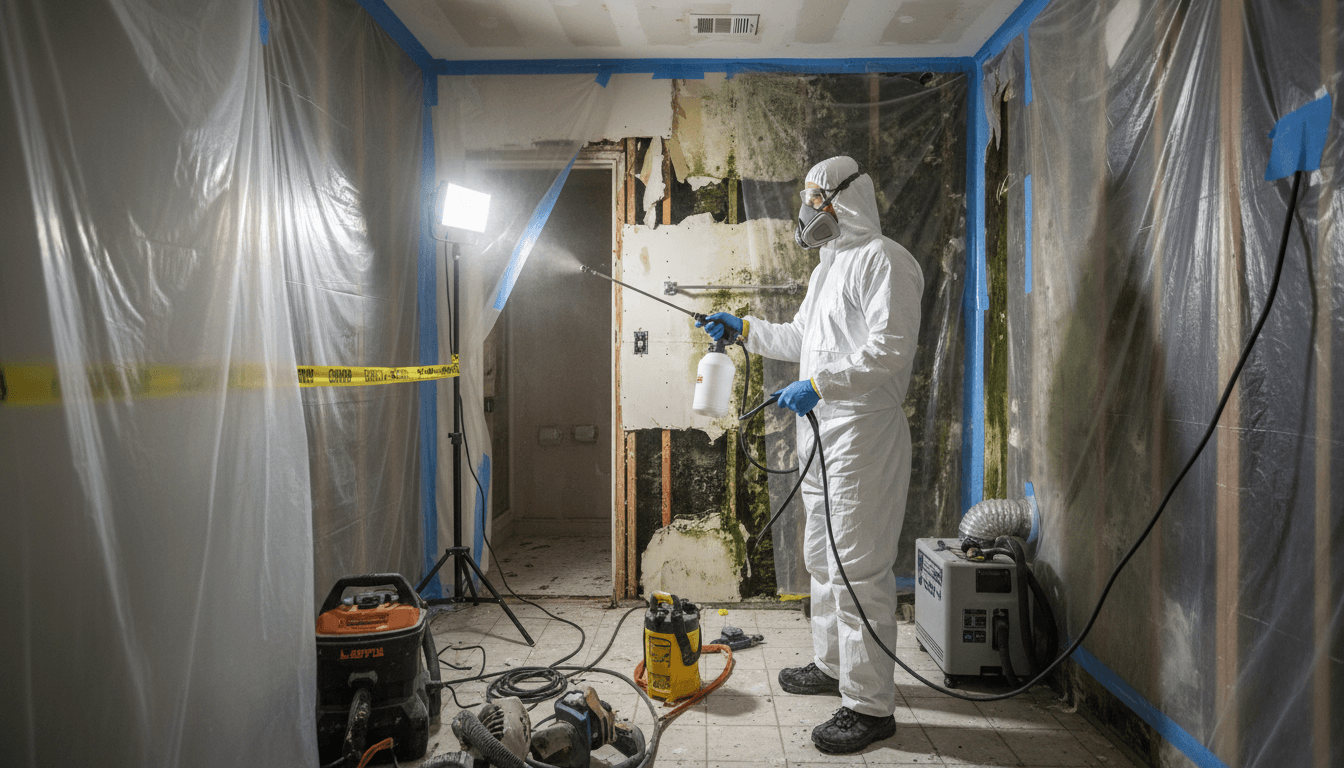
Once we know where the mold is, we isolate the affected area using physical barriers (polyethylene sheeting sealed with tape) and negative-air pressure machines equipped with HEPA filtration. This prevents mold spores from spreading to unaffected parts of your home during removal. Within the containment zone, our technicians remove mold-contaminated materials — typically drywall, insulation, carpet, and sometimes framing members if the wood has begun to decay. Non-porous surfaces like concrete, tile, and metal framing are scrubbed, sanded if necessary, and treated with EPA-registered antimicrobial solutions. All removed materials are bagged, sealed, and disposed of according to Texas Department of Licensing and Regulation (TDLR) guidelines. Air scrubbers run continuously throughout the process, capturing airborne spores and particulate down to 0.3 microns.
Post-Remediation Verification and Prevention
We do not consider a mold remediation job complete until an independent third-party inspector collects air and surface samples and the laboratory confirms that mold levels have returned to normal. This clearance testing protects you, satisfies your insurance carrier, and ensures the work was done correctly. After clearance, we discuss prevention strategies specific to your Houston home: improving bathroom and kitchen ventilation, upgrading attic insulation to prevent condensation, addressing grading and drainage issues around the foundation, and monitoring indoor humidity with a hygrometer (keeping it below 60 percent year-round). For homes with recurring issues, we can install whole-house dehumidification systems that work alongside your HVAC to maintain safe humidity levels even during Houston's most oppressive summer months.
Common Questions
Mold Remediation FAQ
How do I know if I have a mold problem in my Houston home?
Common signs include a persistent musty odor, visible discoloration on walls or ceilings, peeling paint or wallpaper, unexplained allergy symptoms (sneezing, congestion, itchy eyes) that improve when you leave the house, and any history of water damage or flooding. If you suspect mold, call us for a professional inspection — mold often hides behind walls and under floors where it is invisible to the homeowner.
Is mold remediation covered by homeowners insurance in Texas?
Texas homeowners policies vary. Many cover mold remediation if the mold resulted from a covered peril — for example, mold that developed after a burst pipe. However, mold from long-term humidity, condensation, or deferred maintenance is typically excluded. We document every step of the remediation process and work with your adjuster to support your claim.
How long does mold remediation take?
Most residential mold remediation projects in Houston take two to five days for the containment and removal phase, depending on the size of the affected area. Clearance testing results typically come back within 24 to 48 hours after remediation is complete. Reconstruction of removed materials adds another one to two weeks.
Is it safe for my family to stay in the house during mold remediation?
For small, contained projects, it may be safe to remain in unaffected areas of the home. For larger projects or when vulnerable individuals (young children, elderly, immunocompromised) are present, we typically recommend temporary relocation during the active remediation phase. Our containment and negative-air protocols prevent spore migration, but minimizing exposure is always the safest approach.
Can I just clean mold myself with bleach?
Bleach can kill surface mold on non-porous materials, but it does not penetrate porous materials like drywall and wood where mold roots grow. DIY cleanup also risks spreading spores to uncontaminated areas if proper containment is not established. For any mold area larger than about 10 square feet, the EPA recommends hiring a professional. In Houston's climate, mold almost always returns after DIY treatment because the underlying moisture source has not been addressed.
Need Mold Remediation in Houston?
Our Houston-based crews are standing by 24/7. One call starts the restoration process and stops the damage from getting worse.
(281) 326-6554