
Houston Water Damage Restoration
Burst Pipe & Plumbing Damage in Houston, TX
A single burst pipe can release hundreds of gallons per hour into your home. Our emergency team locates the source, shuts off water supply, and begins extraction immediately. We repair or replace damaged plumbing, dry out wall cavities and subfloors with targeted drying equipment, and rebuild affected areas. We also identify contributing factors like pipe corrosion or excessive water pressure to prevent future failures.
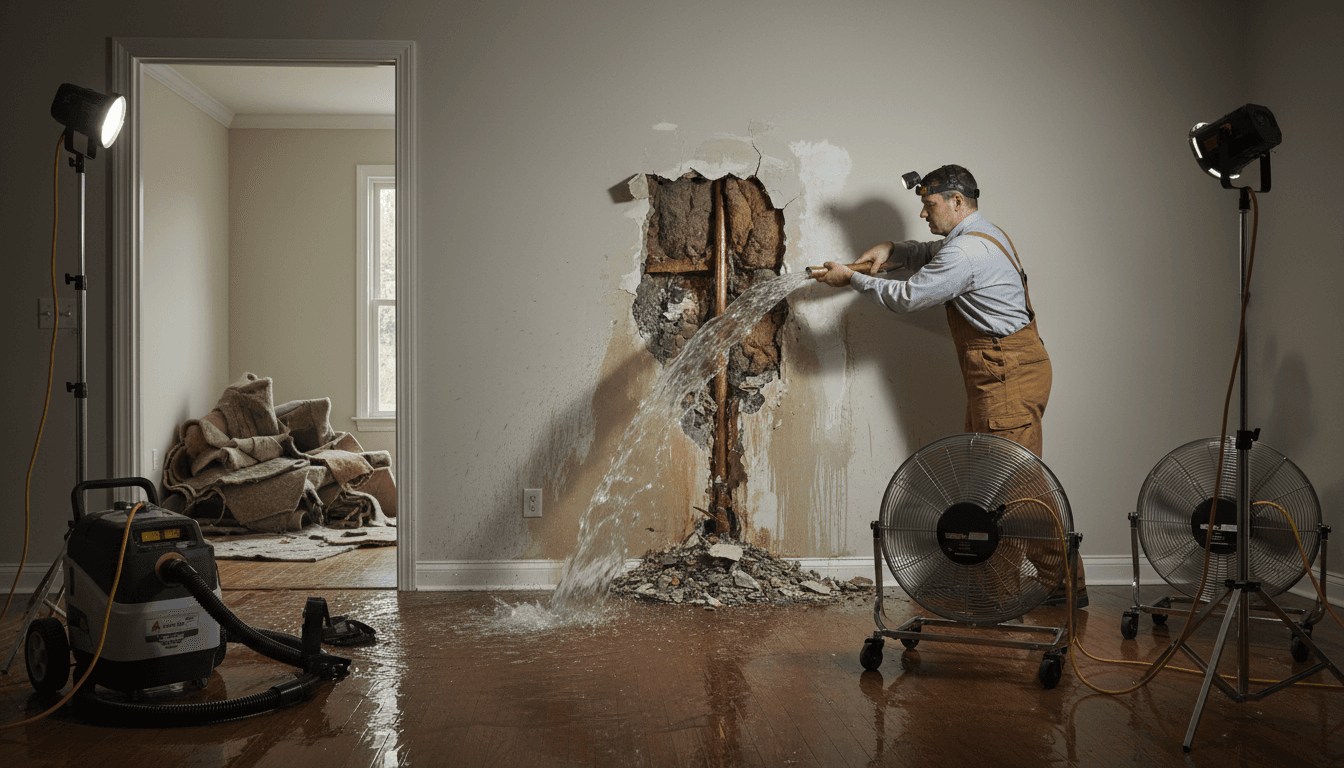
A burst pipe can release hundreds of gallons of water into your Houston home in a matter of hours. Supply lines, water heaters, washing machine hoses, refrigerator ice maker lines, and the copper or PEX plumbing running through your walls and attic are all potential failure points. In Houston, the risk spikes during rare hard freezes — like the catastrophic winter storm of February 2021 that left millions of Texans without power and burst pipes in an estimated 600,000 homes across the state — but pipes can fail any time of year due to corrosion, water pressure surges, shifting foundations, or simply age. Houston Water Damage Restoration provides 24/7 emergency response for burst pipe damage across the Greater Houston area: we stop the water, extract the damage, dry the structure, and rebuild.
Why Houston Homes Are Vulnerable to Burst Pipes
Houston's residential construction practices create several vulnerabilities. Most Houston homes built since the 1970s are slab-on-grade construction with plumbing running through or beneath the concrete slab. The region's highly expansive Beaumont clay soil shrinks during droughts and swells during wet periods, subjecting both the slab and the plumbing beneath it to constant movement. Over time, this movement can fatigue copper pipes at joints and fittings, leading to pinhole leaks that go unnoticed for months or catastrophic failures that flood a home in minutes. Homes built in the 1960s through 1980s — common in neighborhoods like Meyerland, Bellaire, West University, Sharpstown, and Spring Branch — often have original copper or galvanized steel supply lines that are now 40 to 60 years old and well past their expected lifespan. Galvanized pipes corrode from the inside out, restricting flow and eventually failing at threaded joints. In the attic, where Houston's summer heat can exceed 140 degrees, PEX and copper lines expand and contract daily, stressing connections. Water heaters in garages and utility closets are another common failure point — when a tank rusts through or a pressure relief valve fails, 40 to 80 gallons of hot water floods the surrounding area instantly.
Emergency Response: Stopping the Water and Starting Extraction
When you call us for a burst pipe, our first instruction is to help you locate and shut off the water supply — either at the fixture, the water heater, or the main shutoff valve at the meter. This stops the flow and limits additional damage. Our emergency crew arrives within 60 minutes equipped to begin extraction immediately. We use truck-mounted extractors for standing water and weighted extraction tools for saturated carpet and pad. For burst pipes in walls or ceilings, we strategically open affected areas to release trapped water, assess the extent of damage to framing and insulation, and create pathways for airflow during the drying phase. We also photograph everything for your insurance claim before moving or removing any damaged materials, ensuring your adjuster has a complete record of the initial loss.
Structural Drying and Damage Assessment
Burst pipe damage often affects multiple rooms and levels because water follows gravity through wall cavities, floor systems, and ceiling assemblies. A pipe that bursts in an upstairs bathroom can send water cascading down through the ceiling below, soaking drywall, electrical wiring, and insulation along the way. Our technicians use infrared cameras to trace the water's full path through the structure and moisture meters to quantify saturation in every affected material. We then deploy commercial air movers and LGR dehumidifiers in a calculated drying plan — not just placing equipment randomly, but positioning each unit to create efficient airflow patterns that dry the structure as quickly as possible. In Houston's humid environment, this professional-grade dehumidification is critical because the outdoor air often carries more moisture than the air inside a water-damaged home. Opening windows actually makes things worse.
Pipe Repair and Prevention
While our primary expertise is water damage restoration rather than plumbing, we coordinate closely with licensed Houston plumbers to ensure the failed pipe is repaired or replaced before we begin reconstruction. For homes with aging supply lines, we often recommend a plumbing inspection of the entire system to identify other potential failure points before they become emergencies. If the failure occurred beneath the slab, tunneling or rerouting the line through the attic may be more cost-effective than repeated slab repairs — a decision best made by a qualified plumber who understands Houston's soil conditions. For freeze protection, we recommend insulating all exposed pipes in attics, garages, and exterior walls, installing frost-free hose bibs, and knowing the location of your main shutoff valve. During freeze events, keeping cabinet doors open under sinks and maintaining a slow drip on exposed lines can prevent the pipe failures that devastated Houston homes during Winter Storm Uri.
Common Questions
Burst Pipe & Plumbing Damage FAQ
What should I do first when a pipe bursts in my Houston home?
Shut off the water supply immediately — either at the fixture shutoff valve or the main shutoff at the meter box near the street. If the burst is near electrical outlets or panels, turn off the breaker for that area. Then call us at (281) 326-6554. Do not wait to start cleaning up on your own — professional extraction within the first hour dramatically reduces total damage and restoration costs.
Are burst pipe repairs covered by homeowners insurance?
In most cases, yes. Standard homeowners policies in Texas cover sudden and accidental water damage from burst pipes, including the cost of water extraction, drying, and repairing the resulting damage to walls, floors, and ceilings. The plumbing repair itself may or may not be covered depending on the cause of the failure. We document everything thoroughly and work directly with your insurance adjuster.
How do I know if a pipe has burst behind my wall?
Warning signs include unexplained wet spots or discoloration on walls or ceilings, the sound of running water when no fixtures are in use, a sudden drop in water pressure, a spike in your water bill, or warm spots on the floor (which may indicate a hot water line leak under the slab). If you notice any of these signs, call us for an inspection — we use infrared cameras and moisture meters to locate hidden leaks without unnecessary demolition.
Can a burst pipe cause mold in my Houston home?
Absolutely. In Houston's humid climate, mold can begin growing on damp materials within 24 to 48 hours. Water from a burst pipe that soaks into drywall, insulation, or carpet pad creates ideal conditions for mold colonies to establish. This is why rapid extraction and professional drying are so critical — and why we always check for signs of mold growth during and after every burst pipe restoration project.
Need Burst Pipe & Plumbing Damage in Houston?
Our Houston-based crews are standing by 24/7. One call starts the restoration process and stops the damage from getting worse.
(281) 326-6554